
How to Reseal Windows: Steps, Sealants and When Caulk Will Not Help
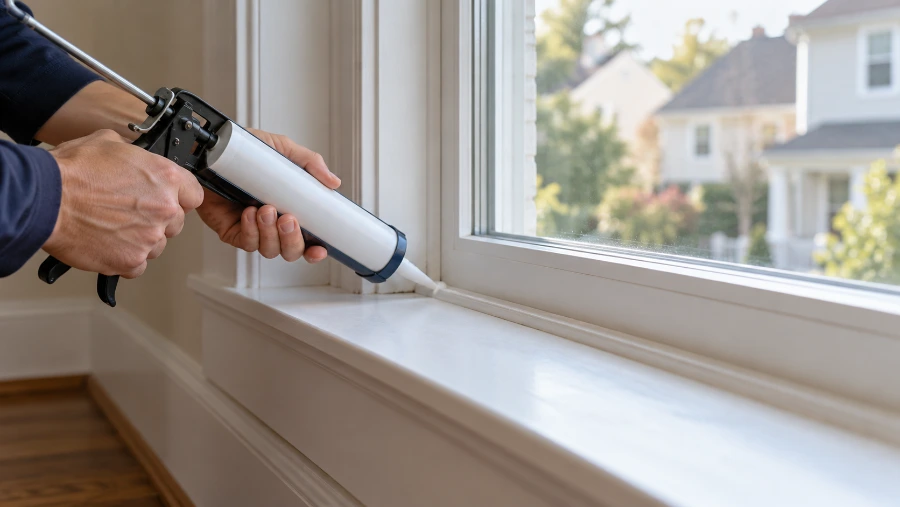
To reseal a window, remove the cracked caulk around the frame, clean the gap, fill wide gaps with foam backer rod, and apply a fresh bead of exterior-grade sealant; replace worn weatherstripping on the sash if you can feel drafts at the moving parts. Most beginners can do one window in about an hour. If the glass itself is fogged between the panes, caulk will not fix it, and the glass unit needs replacing.
| Quick facts | |
|---|---|
| Difficulty | Beginner |
| Time | About 1 hour per window (estimate) |
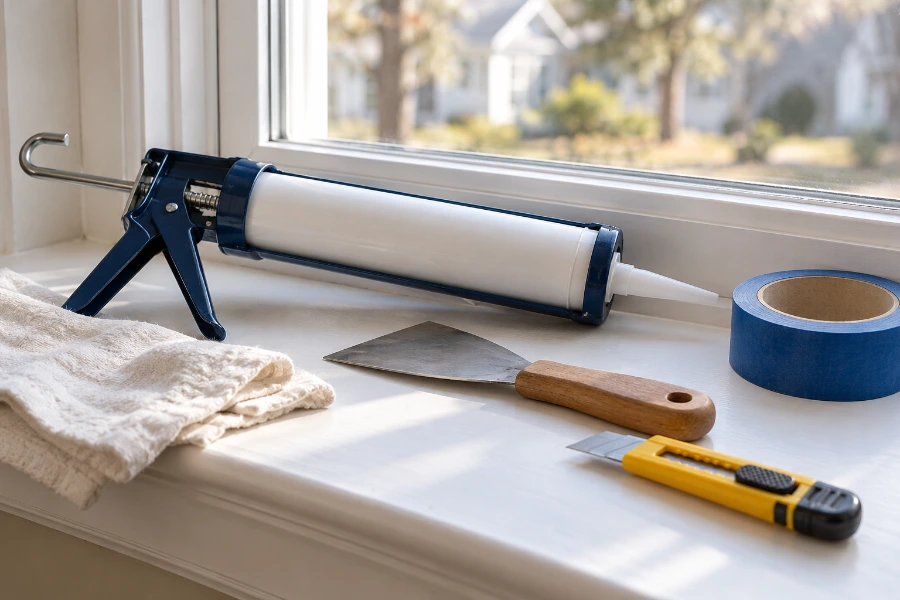
| Materials | Exterior sealant, backer rod for gaps over 1/4 inch, replacement weatherstripping if needed |
| Tools | Utility knife or caulk-removal tool, putty knife, caulk gun, denatured alcohol and rags |
| Permit | No |
| Call a pro if | Glass is fogged between panes, the frame is rotted, or water is getting inside the wall |
First: find out what is actually leaking
On a windy day, hold a stick of incense or a lit candle near the edges of the frame and the sash, and watch the smoke or flame for movement. Check outside for gaps, shrunken caulk or paint that has peeled away from the frame. Look for water stains on the sill and wall below.

- Gap between frame and siding or trim: reseal with caulk (steps below).
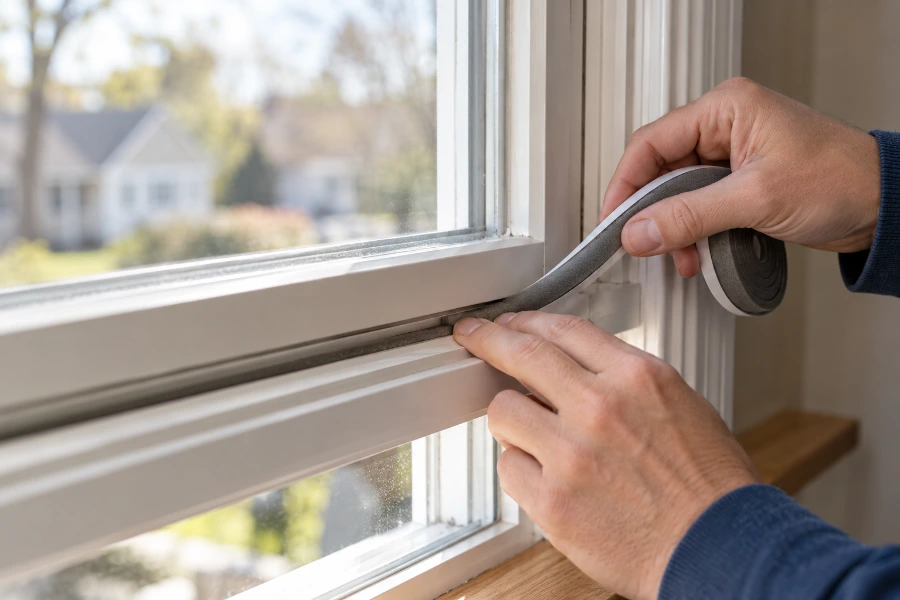
- Draft at the moving sash: replace the weatherstripping, not the caulk.
- Fog or moisture between double panes: the sealed glass unit has failed. Caulking the outside does not repair it. Ask a window company about replacing the glass unit or the whole window.
- Soft or crumbling wood: repair or replace the wood first. Sealant over rot hides the problem.
How to reseal a window frame
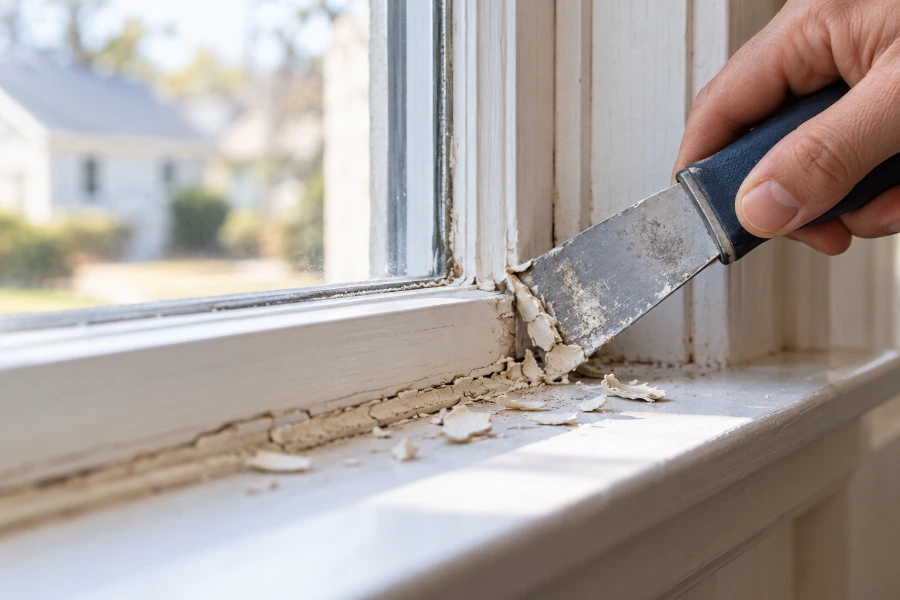
- Check the age of the house. If it was built before 1978, the paint may contain lead. Do not dry-scrape or sand it. Wet the area, use hand tools, contain debris and see the EPA’s lead-safe guidance, or hire a lead-safe certified contractor.
- Pick the right day. Use a dry day above the temperature printed on the sealant tube. Some products need 40°F or more.
- Remove old caulk. Slice along both edges with a utility knife and pull out the old bead. Use a caulk-removal tool for stubborn pieces.
- Clean the joint. Remove dirt and loose paint with a brush, then wipe with denatured alcohol and let it dry. Sealant will not stick to dust or moisture.
- Fill deep gaps. If the gap is wider than about 1/4 inch, press foam backer rod into it so the sealant bridges rather than filling it.
- Apply the sealant. Cut the nozzle to a small opening, hold the gun at about 45 degrees and run a steady bead along the joint, pushing the sealant into the gap.
- Tool it. Smooth the bead with a wet finger or a tool within a few minutes, before it skins over.
- Leave the weep holes open. Many windows have small slots at the bottom of the exterior frame that let water drain out. Do not seal them.
- Do not seal moving parts. Keep sealant off the sash, tracks and any parts that slide or tilt.
- Let it cure. Follow the tube for skin-over and full-cure times before painting or exposing it to rain.
Which sealant to use
- Silicone: flexible and long-lasting, but most types cannot be painted.
- Siliconized or acrylic latex: paintable and easy to clean up, usually a good fit for trim that will be painted.
- Polyurethane: strong and paintable, but harder to work with.
Check the label for “exterior,” the stated temperature range and whether it can be painted.
What it costs
Sealant is usually a small cost per window; the main cost is your time. Hiring this out is priced per window or per hour and varies by region; we are collecting sourced regional quotes and will add a price table here.
If it still leaks
- Water appears inside after rain: look above the window for failed flashing, siding gaps or gutter overflow. The source may not be the window.
- Draft remains: check the sash fit, the weatherstripping and the locks.
- Mold or soft wood around the frame: stop, and have the wall opened and inspected.
Frequently asked questions
How often should windows be resealed? Check the caulk every year. Replace it when it cracks, shrinks or pulls away.
Can I reseal windows in winter? Only if the product is rated for the temperature. Otherwise wait for a mild dry day.
Can fogged double-pane windows be resealed? Not reliably. The unit’s factory seal has failed, so the glass unit usually needs replacing.
Do I need a permit? Resealing does not need one. Replacing windows may, depending on your city.
Written by Nolan Wexford, editor of VistaNestDaily. Last updated: October 23, 2026.
General information only. Codes, prices and conditions vary by location. Work involving electricity, gas, structure or lead paint should be done or checked by a licensed professional.