
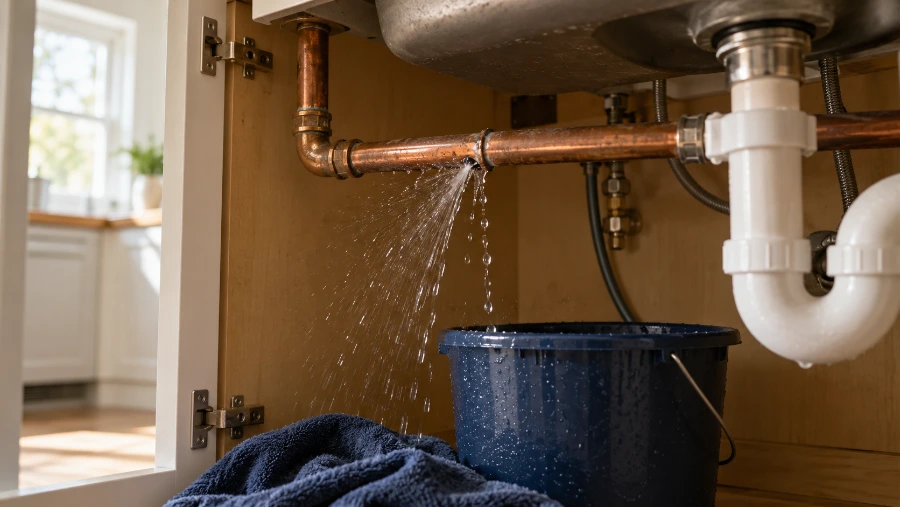
Emergency Plumbing: What to Do First Before the Plumber Arrives
If water is flooding your home, shut off the main water valve first, then stay away from electrical outlets and appliances that are in or near the water, and call a licensed plumber. If you smell gas, leave the house and call your gas utility or 911 from outside; do not call a plumber first.
Do these in order
- Smell gas, or hear hissing near a gas line? Leave immediately, do not use switches or phones inside, and call your gas company or 911 from outside.
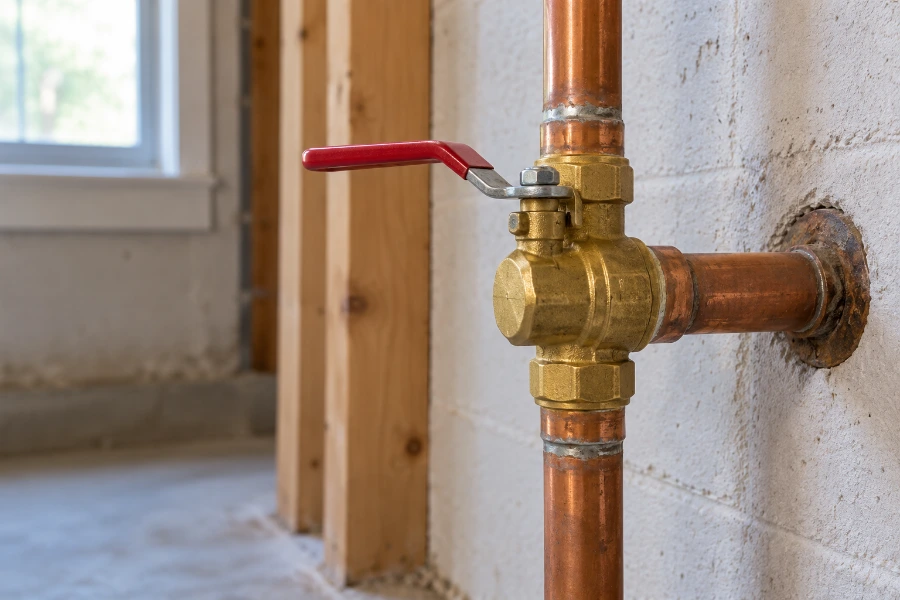
- Shut off the main water valve. It is usually where the water line enters the house: a basement wall, utility room, garage or crawl space, or near the water meter outside. Turn a lever handle a quarter turn so it sits across the pipe; turn a round wheel handle clockwise until it stops.
- Reduce the electrical risk. If water is near outlets, appliances or the electrical panel, do not walk into standing water. If you can reach the breaker panel safely and dry, switch off power to the affected area; otherwise call the utility or an electrician.
- Turn off the water heater. Switch off the breaker for an electric heater, or set a gas unit to “off” or “pilot”, so it does not heat an empty tank.
- Drain the lines. Open the lowest faucet and the highest faucet to relieve pressure and let water drain.
- Contain the water. Use buckets and towels, move belongings, and use a wet vacuum if it is safe to do so.
- Take photos and video of the damage and the source before you clean up. Your insurance claim will need them.
- Call a licensed plumber and tell them what burst, where the water is and that the main is off. Call your insurer too.
Common emergencies and the first move
| Problem | First move | Wait for a pro? |
|---|---|---|
| Burst or leaking pipe | Shut off the main, open faucets to drain | Yes, to repair |
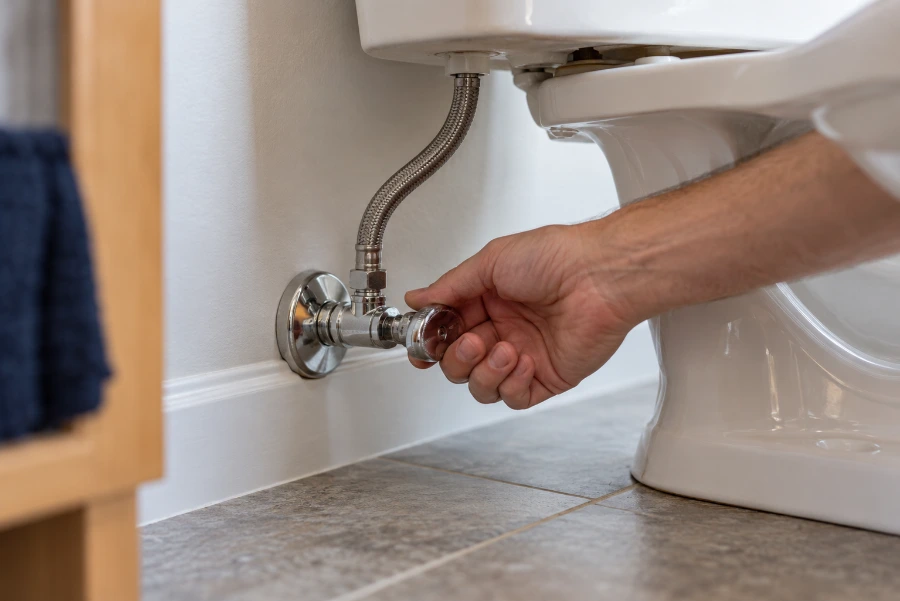
| Overflowing toilet | Lift the tank lid and push the flapper down; close the shutoff valve at the wall | Only if it will not clear |
| Sewage backing up | Stop using all water, keep people and pets out, avoid contact | Yes, and ask about cleanup |
| Leak at the water heater | Shut off the water to the heater and power to it | Yes |
| Frozen pipe, not yet burst | Open the faucet, warm the pipe slowly with a hair dryer; never use an open flame | If it will not thaw |
| Water coming through a ceiling | Shut off the main and switch off power to that area if safe | Yes |
What not to do
- Do not pour chemical drain cleaner into a sewage backup or an overflowing fixture.
- Do not cut into a pipe that might be under pressure or near wiring.
- Do not use an open flame to thaw pipes.
- Do not wait for a slow leak to “get worse” before shutting the water off.
Choosing an emergency plumber
- Ask for the license number and check it with your state licensing board.
- Ask for the call-out fee, hourly rate and any after-hours charge before they come.
- Be cautious of anyone who demands full payment in cash up front or will not give a written estimate.
- Ask whether the repair is temporary or permanent.
Call-out fees and hourly rates vary by region and time of day. Ask for both before the plumber leaves for your address. We will add sourced regional ranges here.
Prepare before it happens
Find your main shutoff today and test that it turns. Label it. Know where the water heater and electrical panel shutoffs are. Keep the number of a licensed plumber in your phone.
FAQ
Does homeowners insurance cover a burst pipe? Often it covers sudden and accidental damage but not slow leaks or wear; check your policy and ask your insurer.
Should I turn off the main before calling? Yes, if you can do it safely.
How fast can I expect a plumber? It varies by area and time. Ask for an arrival window when you call.
Written by Nolan Wexford, editor of VistaNestDaily. Last updated: October 23, 2026.
General information only. Codes, prices and conditions vary by location. Work involving electricity, gas, structure or lead paint should be done or checked by a licensed professional.